HEP provides local services in Seattle for patients & leads advocacy work for elimination of viral hepatitis at the state and national level.



-
Viral Hepatitis Care Coordination
HEP’s care coordinators work one-to-one with people who have hepatitis C, facilitating access to testing, diagnosis, treatment and resources. All services are free and no insurance is required.
Seattle STEP Clinic is a collaboration combining the harm reduction mission of Hepatitis Education Project with the medical services of Seattle Roots Community Health. Our evidence-based, low-barrier approach to care centers the needs and goals of each client individually to provide wrap-around care.
HEP’s in-house SSP is open 4 days-a-week, Mon–Thu, 12:30–5:30 p.m. Our friendly and knowledgeable staff will be there to greet you, provide harm reduction supplies and information, offer resources and referrals, and answer any questions you might have.
-
Since 2004, HEP has been involved with work to expand viral hepatitis education, testing, treatment in correctional facilities in hopes of stopping the spread behind bars and improving health outcomes for people who are incarcerated.
-
National Viral Hepatitis Roundtable
National Viral Hepatitis Roundtable is an initiative of the Hepatitis Education Project. Hepatitis Education Project is a nonprofit that receives funding from a diversity of sources, including foundations, governments, individual donors, insurance companies, and pharmaceutical companies.
National Hepatitis Corrections Network
The National Hepatitis Corrections Network (NHCN) is a network of people with an interest in hepatitis C in corrections managed by HEP. We support a public health approach to hepatitis education, prevention, testing, and treatment in prisons and jails. Network partners include correctional administrators and healthcare providers, researchers, legal and policy stakeholders, community-based organizations, and educators.
Local Patient Services - Seattle / King County
Viral Hepatitis Care Coordination
Get Tested, Get Treated, Get Cured.
HEP’s care coordinators work one-to-one with people who have hepatitis C, facilitating access to treatment and resources, from diagnosis to cure and beyond. All services are free and no insurance is required.
Services we offer:
Meet with a care coordinator during your first visit to help us understand how we can best assist you
Get tested for hepatitis C for free
Link you to care if you’ve already tested positive for hepatitis C
Find a primary care physician and/or specialist
Assist with health insurance sign up
Share information on current and upcoming hep C treatment options
Advocate for fair access to hep C treatment medications
Offer information about community resources
Navigate insurance denials with clients and providers
Empower you to take control of your own medical decisions
Provide a non-judgmental and supportive environment at all times
-
We offer monovalent hepatitis A or B vaccine, as well as a combination vaccine.
The monovalent series is 2 doses, with several weeks between doses. Monovalent hep A = 2 doses six months apart; Monovalent hep B = 2 doses one month apart
The combination vaccine is 3 doses, with several weeks between doses. We will provide you with a reminder card after each dose so you can remember when to return! Combination = three doses 0, 1, 6 months from initial dose, 5 months between second and third doses
No appointment necessary! Recommended to call ahead and confirm there is a provider available.
-
Rapid Antibody Testing - Find out your results today!
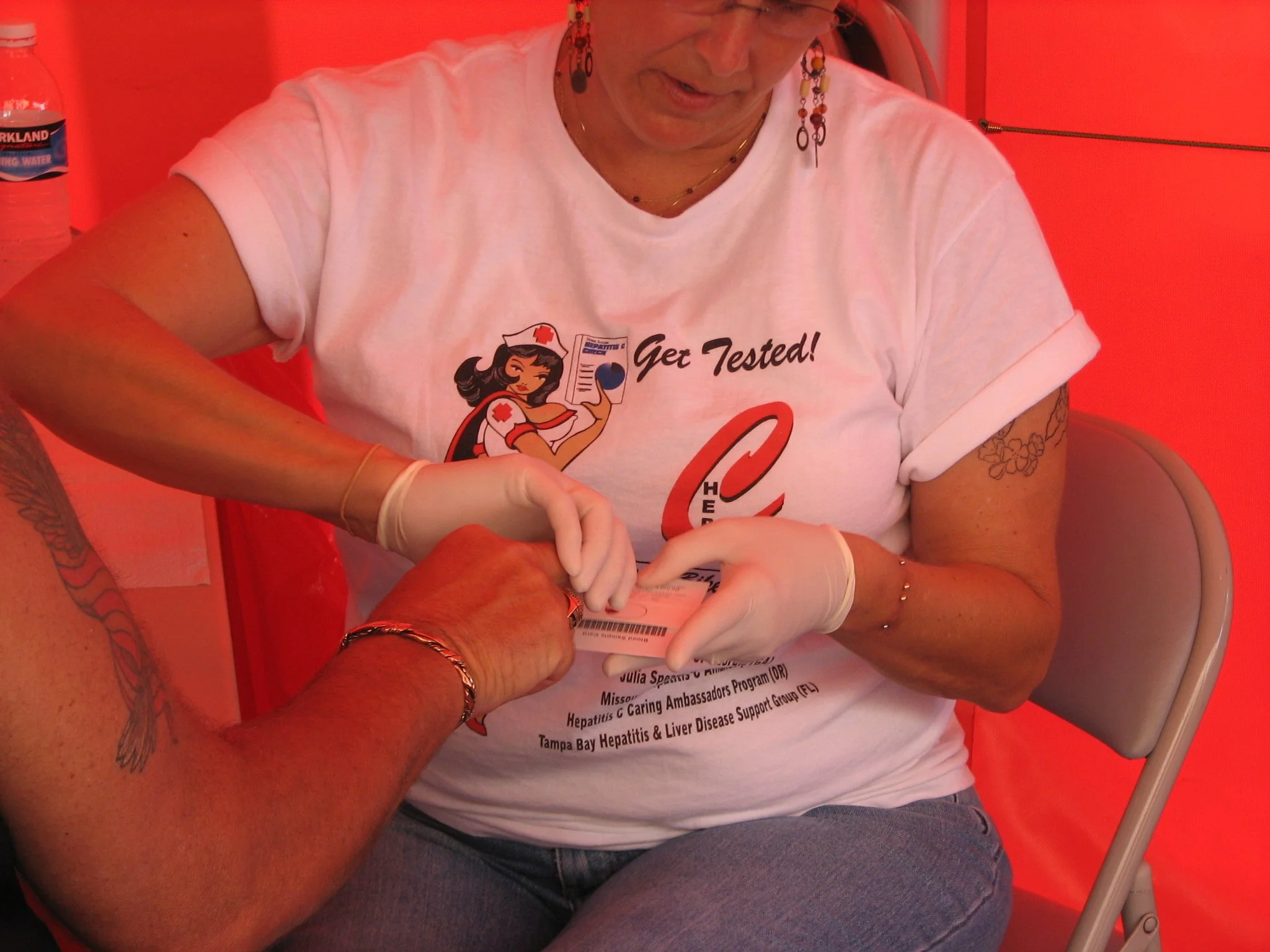
A finger prick test that checks for exposure to hepatitis C.
It does NOT confirm an active infection. About 75% of people exposed to the hepatitis C virus develop a chronic infection, and only a PCR (also know as an RNA test or a viral load test) can confirm active infection.
Results after 20 minutes! (Perk: $5 gift card!)
If the test result is reactive, we will connect you with confirmatory testing.
Confirmatory PCR Testing
Individuals who have a reactive HCV antibody test should be tested to determine whether or not they resolved the infection or developed a chronic hepatitis C infection.
A blood draw that tests for active hepatitis C infection.
Results typically take one week and can determine if an individual may need hepatitis C treatment. (Perk: $15 gift card, or $20 when combined with hepatitis B test results!)
If your results are positive, then we will connect you with medical case management if you like, or provide you with options for referrals as needed.
-
The test can tell you whether or not you need to be vaccinated for hepatitis B, whether or not you’ve been exposed to hepatitis B, and whether or not you have a hepatitis B infection.
A blood draw that can easily be obtained alongside a hepatitis C confirmatory test!
Results can take up to one week and can determine if someone is in need of the hepatitis B vaccine, has been exposed or is chronically infected. (Perk: $15 gift card, or $20 when combined with hepatitis C PCR test results!) Incentives are given when receiving test results.
Have you already tested positive? Do you feel unsure about next steps? We can help!
Complete our self-referral form or give us a call at (206) 732-0311, and we’ll be in touch to figure out how we can assist you.
Filling out this form means you’re asking to be connected to a service provider in your area who’s able to meet a social or medical need that you or someone in your care may have. Once completed, this form is sent to the coordination center in the region where you’d like to receive care or services, and someone from that coordination center will contact you within two business days. The information you enter is completely confidential and there is no cost for this service. Please use this form only to request services for yourself or a child (under 18 years old) or adult for whom you have legal guardianship. Consent submitted through this form should be signed by the person who would be receiving services or by their parent or legal guardian only.
The Seattle STEP Clinic
Seattle STEP Clinic is a collaboration combining the harm reduction mission of Hepatitis Education Project with the medical services of Seattle Roots Community Health. Our evidence-based, low-barrier approach to care centers the needs and goals of each client individually to provide wrap-around care.
New patients: Walk-in appointments Tuesday–Thursday, 1:00p.m.–3:30p.m.
Returning patients: Walk-in appointments or by phone at (206) 732-0311 , Tuesday–Thursday, 1:00p.m.–4:30p.m.
Services we offer:
Free medications to reduce or cease opiate use offered same-day, including Suboxone (buprenorphine, “subs”) and Vivitrol (naltrexone), and medications to ease withdrawal symptoms
Help enrolling in health insurance and navigating healthcare resources
Basic medical care such as treatment of skin infections, urinary tract infections, contraception
Substance use disorder/drug and alcohol assessments
Referrals for court-ordered assessments/treatment
Did you know?
Appointment times are scheduled, and we ask that you try your best to make it on time. We understand if things come up, which is why we offer walk-in appointments without calling in advance.
There is no penalty for late, rescheduled, or missed appointments.
Prescriptions for buprenorphine are generally provided on the first day.
Substance use and behavioral health counseling are not required to receive medication.
Urine drug tests that indicate substance use are not used to deny prescriptions.
We will not turn you away for lack of insurance, ID, or address.
Harm Reduction Services
HEP’s in-house Safer Supplies Program (SSP) is open 4 days a week, Mon–Thu, 12:30–5:30 p.m. Our friendly and knowledgeable staff will be there to greet you, provide harm reduction supplies and information, offer resources and referrals, and answer any questions you might have.
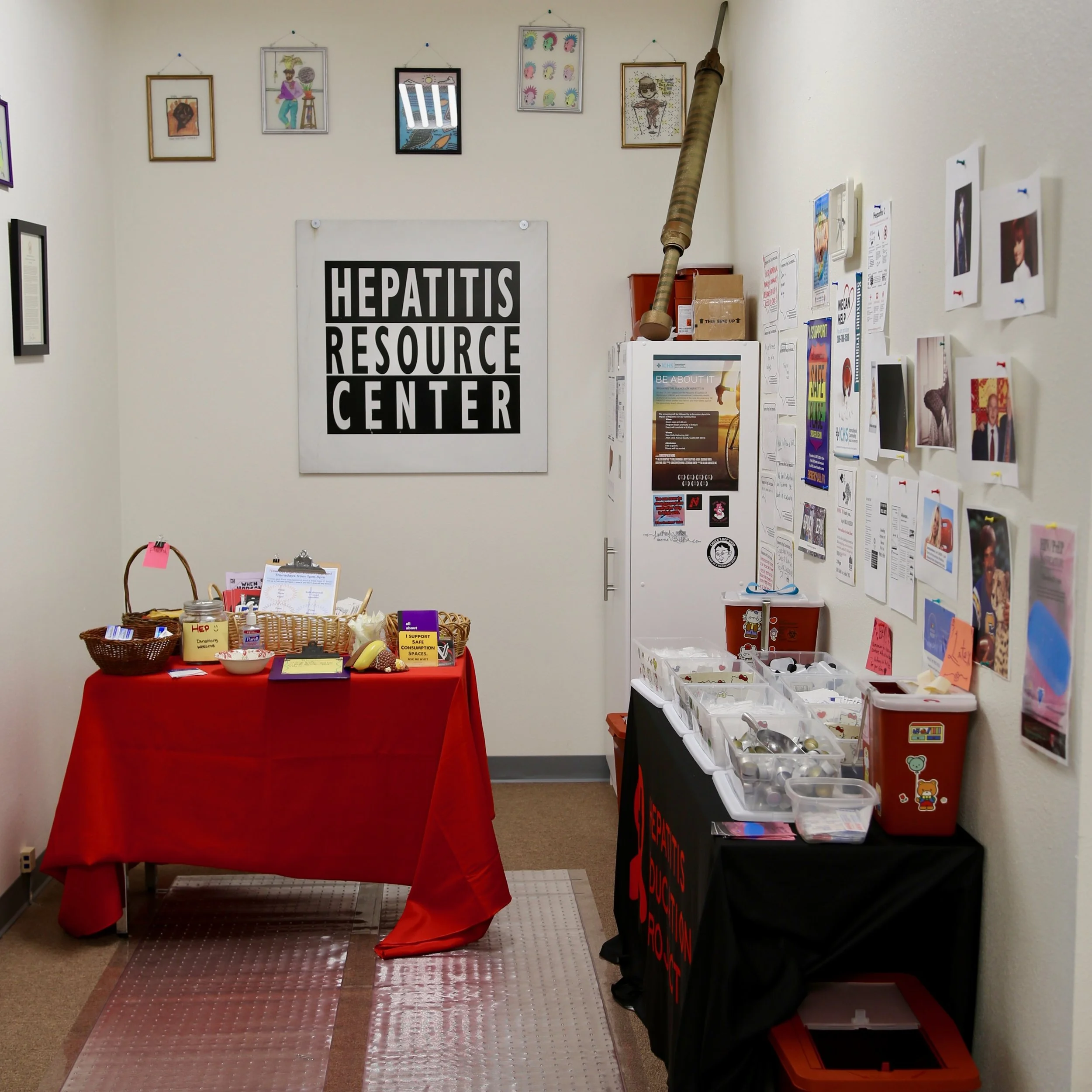
Supplies and services we offer:
Sterile syringes and safe disposal of used syringes
Injectable naloxone and naloxone nasal spray (Narcan)
Other infectious disease prevention supplies such as alcohol pads, gauze, bandages, and safer sex supplies
Essentials like water, clothing, and hygiene supplies as available
Safer use consultation and overdose prevention education
Drug checking service
It’s free and anonymous.
We currently offer drug checking as a drop-off service, where you can drop off a small sample during HEP’s open hours and have results relayed back to you within the span of a week.
Using a special machine called a spectrometer, we’re able to test drug samples to see what’s actually in them. It detects things like fentanyl, xylazine, and other common cuts, and all it takes is a sample the size of a grain of rice.
This is a free, anonymous service — we will not collect your information.

Community Outreach
We will meet you where you are.
HEP’s Prevention & Outreach Program team provides weekly street-based outreach to encampments across Seattle. We also have a growing number of partnerships with local organizations where our staff regularly visit their sites to provide rapid hepatitis C testing and education about viral hepatitis.
State and National - Washington State / USA
Correctional Health Education
Get Tested, Get Treated, Get Cured.
Did you know that people living in correctional facilities are approximately 20 times more likely to have hepatitis C and up to 10 times more likely to have hepatitis B than the general population?
Misinformation and a lack of institutional resources contribute to the high rates of viral hepatitis infection among people experiencing incarceration. Variation in policies and practices for screening and treatment of viral hepatitis means many incarcerated patients do not know their status. They are often unable to receive treatment and may find it difficult to advocate for themselves. Since 2004, HEP has been involved with work to expand viral hepatitis education, testing, treatment in correctional facilities in hopes of stopping the spread behind bars and improving health outcomes for people who are incarcerated.
Since 2004, HEP has been contracted by the Washington State Department of Corrections to conduct viral hepatitis and peer educator trainings at prisons and work release facilities throughout Washington State.
In 2006, HEP began conducting viral hepatitis and harm reduction trainings to people living at the King County Correctional Facility, and we have since developed a partnership with the Seattle Municipal Court to expand educational opportunities for people who are justice-involved throughout King County.
Since 2015, in addition to viral hepatitis classes, HEP began training people living in Washington prison facilities as peer educators in the SHIELD program. Self Help in Eliminating Life-threatening Diseases (SHIELD) is an evidence-based, HIV harm reduction intervention supported by the Centers for Disease Control and Prevention. HEP collaborated with prison administrators to adapt the SHIELD curriculum for the correctional setting and incorporated viral hepatitis education into the training. SHIELD graduates are certified peer educators who are trained to communicate with others in their social networks about harm reduction for HIV and viral hepatitis. Peers often have greater credibility inside these networks, especially in prison, and they can reach people who may not be engaged in traditional voluntary educational programming. The goal is for accurate information about HIV and viral hepatitis prevention to reach as many people as possible.
In response to the COVID-19 pandemic, the Correctional Health Program at HEP has modified and adapted in-person educational materials for self-directed correspondence delivery for people experiencing incarceration while spatial distancing measures are in place.
Curriculum
For each of these partnerships, the curriculum addresses a range of issues relevant to the diverse developmental and cultural composition found in correctional populations and includes:
– Modes of viral hepatitis and HIV disease transmission, methods for prevention, including harm reduction and immunization, disease outcomes, and options for treatment
– Safer options to prevent transmission of viral hepatitis and other blood borne infections
– Resources for formerly incarcerated individuals upon release, including referrals to community and public health facilities
– Support and resources for persons with chronic hepatitis B or hepatitis C infection including transmission prevention, health promotion, and advocacy information
National Hepatitis Corrections Network

National Viral Hepatitis Roundtable (NVHR)
-
Through advocacy, education, and support to national, state and local partners, NVHR expands the capacity of advocates, community organizations, health care providers, and public health professionals to eliminate viral hepatitis in the U.S.
Hepatitis C: State of Medicaid Access
Hepatitis C: State of Medicaid Access provides an in-depth evaluation of direct-acting antiviral (DAA) access for hepatitis C treatment in state Medicaid programs.
Policy Innovation Exchange (PIX)
PIX is a first-of-its-kind national resource for state and local decision-makers, public health departments, and other stakeholders looking to improve public health outcomes for HIV, Viral Hepatitis, STDs, and TB Prevention.
Hepatitis Network for Education and Testing (HepNET)
HepNET is a network focused on identifying and addressing the unmet needs of people who inject drugs to improve their access to viral hepatitis care.
Voices4Hep
Voices4Hep is a network of patient, provider, and community advocates taking action in their communities to eliminate viral hepatitis.
-
We advocate for policies at the state and federal levels that will advance our vision of an equitable world free of viral hepatitis. Our policy priorities include:
Elimination: NVHR is working to lead the viral hepatitis community in elimination advocacy efforts and to eliminate viral hepatitis in the United States by 2030.
Funding: NVHR aims to support a comprehensive and integrated response to viral hepatitis in the United States by advocating for fully funded state and federal elimination plans.
Harm Reduction: NVHR is working to ensure integration and alignment of viral hepatitis elimination strategies into comprehensive drug user health initiatives across harm reduction, treatment, and recovery.
Health Equity: NVHR is fighting for equitable access to viral hepatitis prevention and care to effectively serve disproportionately impacted populations.
Immunizations: NVHR is working to raise awareness about, improve access to and increase utilization of hepatitis A and hepatitis B vaccines.
Testing: NVHR is working to ensure that U.S. Preventive Services Task Force (USPSTF) guidelines for hepatitis B and C testing are implemented in public and private healthcare systems.
